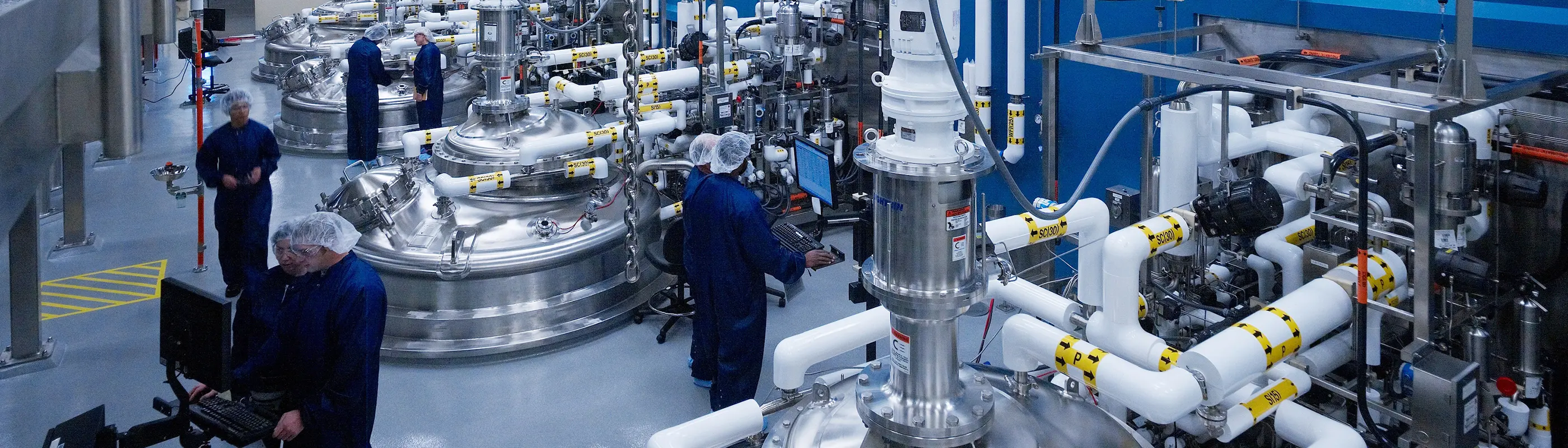
Pharmaceutical

Make equipment-risk decisions without slowing validated production.

Tacit AI turns maintenance, deviation, and CAPA evidence into source-traceable FMEA proposals—reviewed before anything enters a validated workflow.

15.3% less unplanned downtimeone critical fill-finish station
32% → 73% work-order completenesscustomer scoring method
3 weeks to first source-traceableFMEA draft
From evidence to action

Turn evidence into approved action.

Protect production

Bring work orders, deviations, CAPAs, PM history, manuals, and procedures into one evidence view. Tacit AI proposes failure modes and priorities with links back to the records used, so teams can focus on consequential equipment risk.

Connect CAPAs

Compare new events with approved risk analyses and flag possible coverage gaps for investigation. Tacit AI does not close deviations or determine CAPA effectiveness; authorized Quality and Engineering reviewers retain those decisions.

Control revisions

Review proposed FMEA rows, ratings, controls, and source citations before approval. Accepted changes can enter the customer’s document-control and change-control processes; rejected proposals remain outside the controlled record.

Reuse approved work

Approved content can be proposed for comparable equipment classes, while site, process, duty, configuration, and qualification differences stay visible. Each receiving team reviews applicability before inheriting any conclusion.

Fit validated systems

Begin with bounded data extracts and controlled outputs instead of changing validated source systems. Integration, deployment boundary, access, Part 11 applicability, and validation responsibilities are agreed with the customer’s Quality and IT teams.

Improve maintenance data

Measure completeness, source coverage, and terminology consistency across work orders and PM records. Show where weak documentation limits equipment-risk decisions so teams can improve the evidence at its source.

Built for pharma leaders

For leaders who own uptime and quality.

For Manufacturing, Quality, Engineering, and Reliability leaders making controlled equipment-risk decisions.

Operating site

Close operating risk gaps

Use selected work orders, deviations, CAPAs, PM records, and approved documents to test whether the current equipment-risk baseline reflects known operating evidence.

New or changed process

Build the pre-startup baseline

Use OEM manuals, specifications, qualification evidence, and approved process information to prepare a draft baseline. The customer’s validation, Quality, and Engineering owners decide acceptance and use.

Standards and methods supported

Applicability and final compliance decisions remain with the manufacturer and its authorized personnel.

GMP
21 CFR Parts 210/211
21 CFR Part 11, where applicable
ICH Q9
EU GMP Annex 11, where applicable
IEC 60812 methodology
Controlled engagement

Validate the workflow on one bounded equipment decision.

Before work starts, your team agrees the evidence set, baseline, reviewers, output status, and expansion criteria. No proposal enters a controlled record without the customer’s authorized approval.

Scope

Set the boundary

Customer-defined

Choose one system or line, relevant records, intended decision, system boundary, and accountable Quality and Engineering reviewers.

Deliverable Approved scope, evidence inventory, baseline, and review method.
Validate

Review the proposals

Agreed schedule

Tacit AI prepares source-linked FMEA and data-quality proposals. Named reviewers assess relevance, unsupported assumptions, and fit with site methods.

Decision Proceed only if the agreed evidence, quality, and workflow criteria are met.
Expand

Govern approved reuse

After validation

Add equipment classes or sites with local exception review, documented approvals, integration controls, and ownership for future revisions.

Decision Expand against customer-defined operational and quality outcomes.
Explore a fill-finish pilot

Bring a bounded set of work orders, deviations, CAPAs, and the current FMEA. We will define what a useful, source-traceable draft must show.

Privacy Settings
We use cookies to enhance your experience while using our website. If you are using our Services via a browser you can restrict, block or remove cookies through your web browser settings. We also use content and scripts from third parties that may use tracking technologies. You can selectively provide your consent below to allow such third party embeds. For complete information about the cookies we use, data we collect and how we process them, please check our Privacy Policy
Youtube
Consent to display content from - Youtube
Vimeo
Consent to display content from - Vimeo
Google Maps
Consent to display content from - Google
Spotify
Consent to display content from - Spotify
Sound Cloud
Consent to display content from - Sound