Manual standardization fails because humans can’t maintain consistency across classes, sites, and teams over time. Tacit enforces it at three levels, automatically.
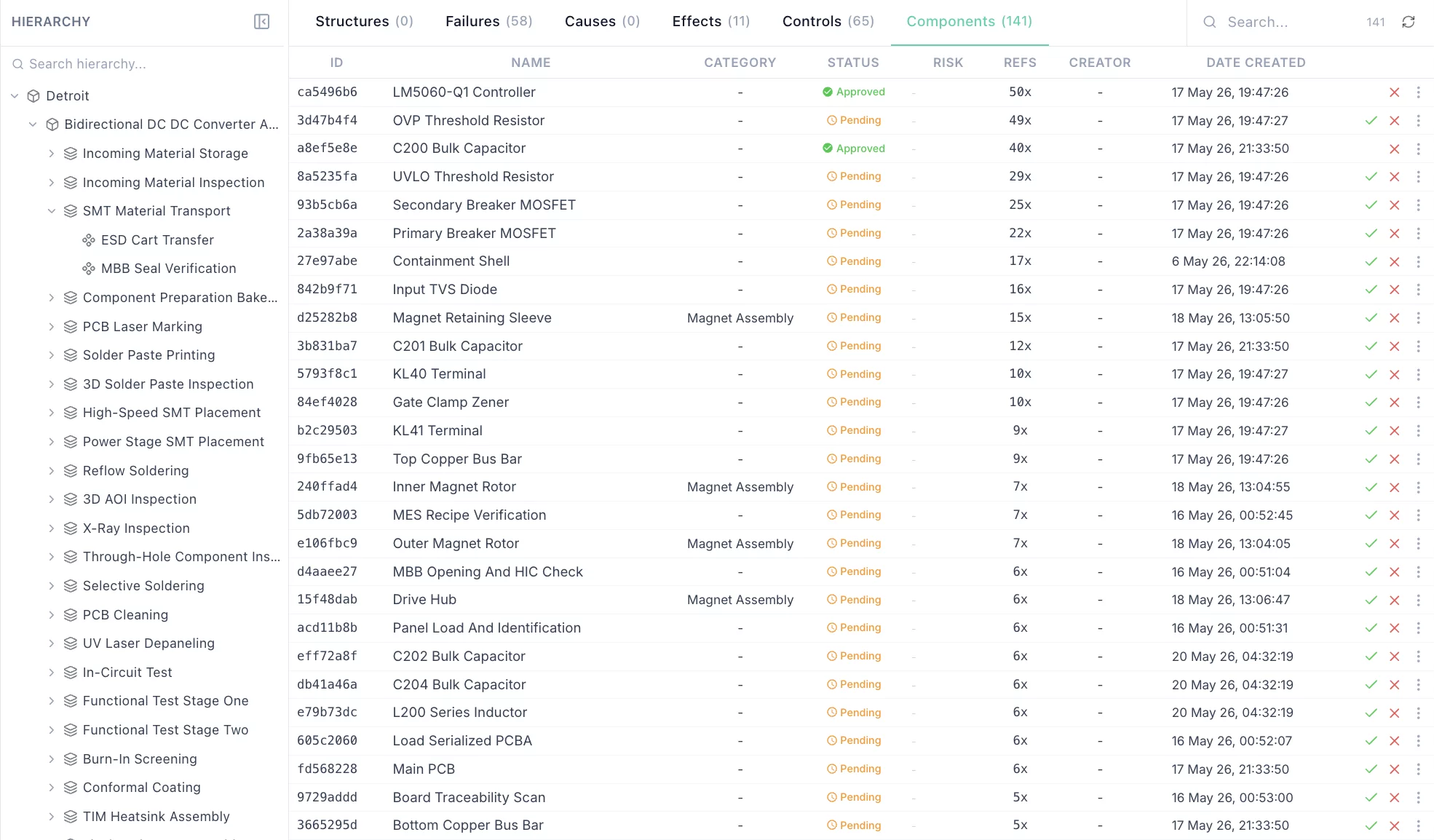
One master FMEA per class. Individual items inherit with tracked variations.
Same component across product variants shares failure modes. Confirm a DFMEA once - every platform inherits.
Same manufacturing step across lines shares controls and failure modes. Update the master PFMEA, every line is flagged.
Group pumps, compressors, or agitators into classes. Gang failure data across instances for valid Weibull curves.
A living failure mode database that grows as you use the platform.
Failure modes extracted from failure reports, specs, manuals, test data, and FMEA generation. No manual entry.
Failure modes connected to causes, effects, mechanisms, and corrective actions. Symptom to root cause in clicks.
Same failure mode across different classes or domains? The database surfaces patterns so you address systemic issues.
Store and reuse templates and completed analyses. New system? Start from what you already know about that class.
Categories aligned with IEC 60812, ISO 14224, and AIAG-VDA taxonomies. Industry-standard language from day one.
Full-text search across all failure data. Export subsets for reporting, audits, or integration with other systems.
Master FMEA is the baseline. Each instance inherits with site-specific overrides tracked separately. Update the master - every variation is flagged with deltas highlighted.
Every cell change is versioned: who, what, when, why. Side-by-side diff. Sign-off workflows before promotion. Critical for QMSR, IATF 16949, AS9100.
Level 1 is day one. Level 3 is steady state. Each builds on the last.
AI generates hierarchies and failure modes from your documents. Engineers approve or reject each entry. Confirmed entries become reusable class templates automatically.
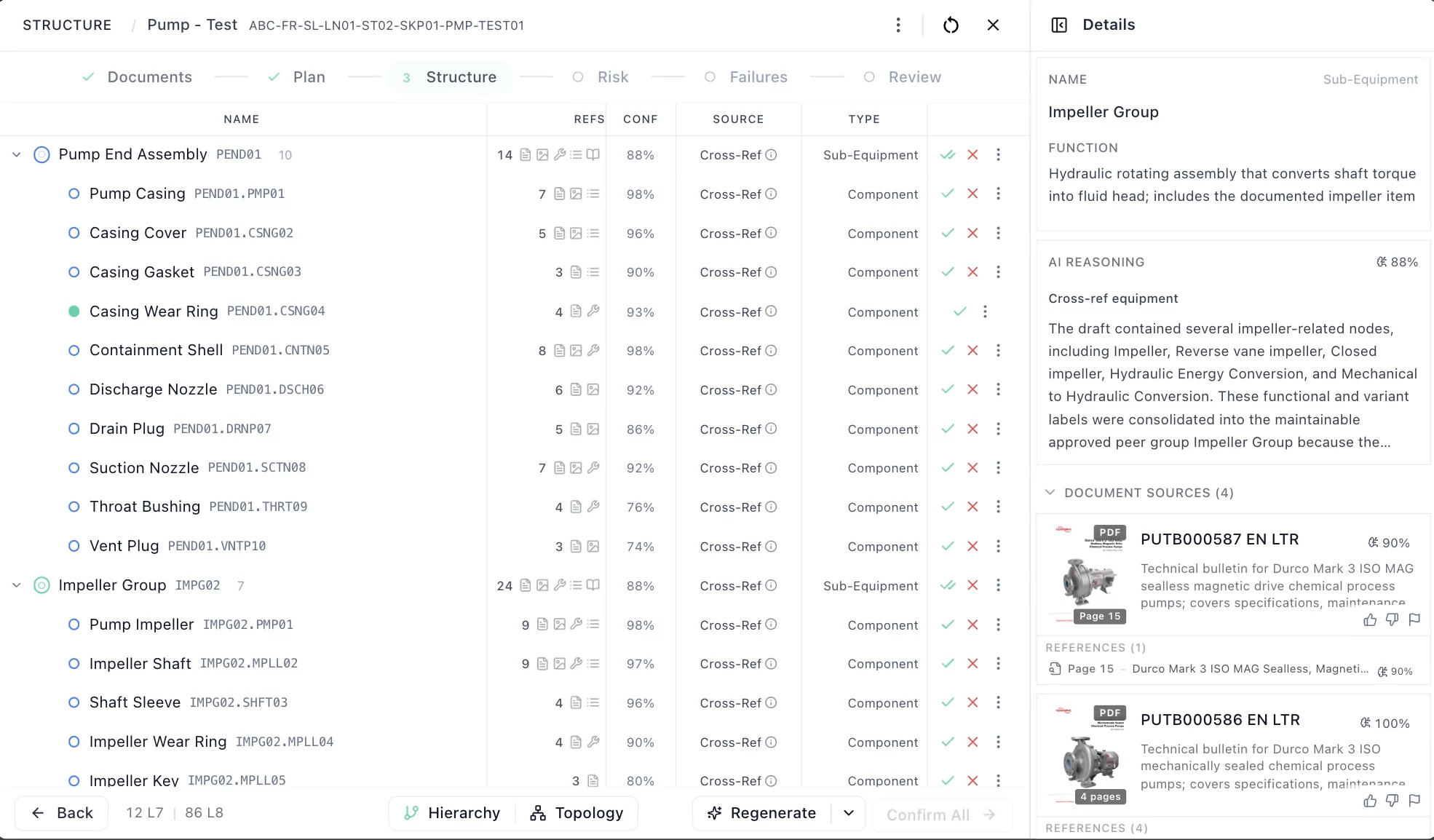
For similar components, AI suggests existing class templates instead of generating from scratch. If 80% of engineers choose the same template, it becomes the class default.
AI scans the full database across all sites. Finds duplicates (“Pump leaking” vs “leakage on pump”). Flags version drift. Suggests merges and naming alignment.
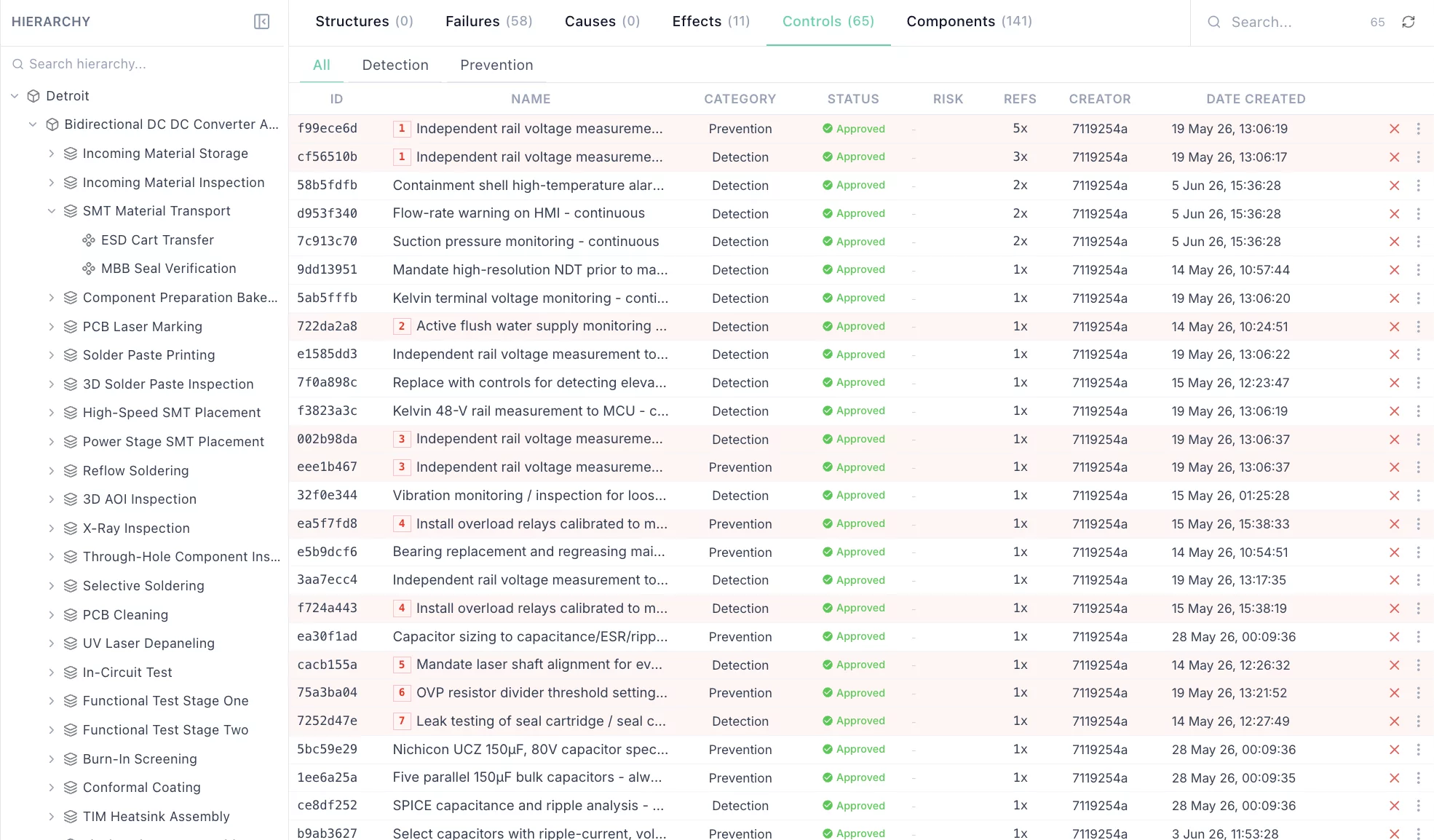
Standardization matters most in multi-site operations where consistency is a regulatory and operational requirement.
Send us a sample of your FMEAs. We show you where naming, structure, and coverage diverge.
Read-only access. Nothing to migrate.

